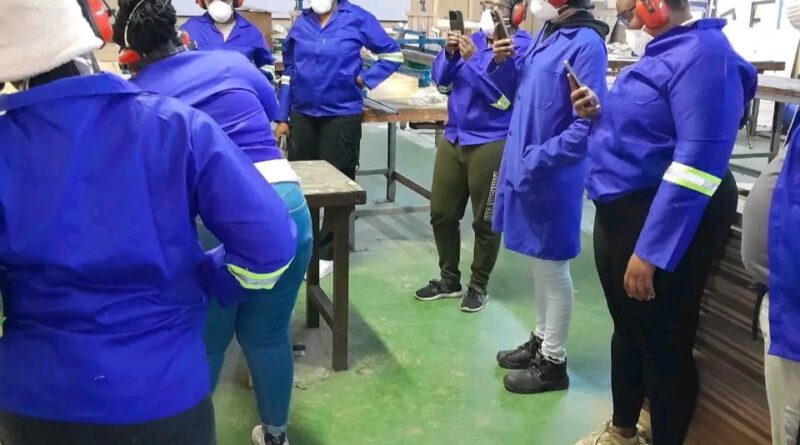
Why South African Artisans Are Underpaid — And What Can Be Done About It
Artisans, such as welders, electricians, millwrights, fitters and turners, plumbers, mechanics, and other skilled tradespeople, are South Africa’s economy’s backbone, as they provide the hands-on skills and expertise necessary for maintaining the country’s operational infrastructure and industries. However, despite the significance of these artisans, they are consistently underpaid and earn significantly less than the worth of their contributions – a situation that has led to the lack of young talent within trade professions and chronic skills shortages that costs the economy billions of rand in lost productivity.
To understand the artisans underpayment situation first requires an economic and social analysis. Solving the issue requires the coordinated effort of government, industry bodies, employers, and training institutions. The following describes some of the central issues and possible solutions.
A Legacy of Skills Disruption and Misalignment
One of the reasons artisans are undervalued is South Africa’s long history of skills pipeline disruption, which goes back decades. During the late apartheid and early democratic transition periods, the vocational training institutions, technical schools, and apprenticeship systems underwent restructuring or were completely neglected. The result was an entire generation in the country that suffered from artisan production gaps.
Even now, the number of qualified tradespeople in the fields of mining, construction, manufacturing, automotive engineering and energy is not enough, especially in mining, construction, manufacturing, automotive engineering and energy. Ordinarily, this should increase their wages, but since training pipelines are disconnected, employers find it difficult to tell the difference between actual, well-trained artisans, and those who are not. While this streaming of the labour force creates a flowed market where the profession’s overall earning remains stagnant, it also creates an odd or unbalanced labour market. artificially holds the wages the profession as a whole stagnant.
Another consequence of the disconnected pipeline is that many of the new tradespeople entering the market lack some confidence or the competencies to do the work, giving employers the opportunity to use this to their advantage and offer lower wages, especially in areas where there is little regulation of wages and where there is little regulation of wages.
Misclassification and Oversupply of Low-skilled Work
A major system problem is that workers with some training or, as it is labelled, “trade-related experience” are classified as artisans or work under artisan titles, but do not possess the full trade test qualification. This results in an overstretched labour pool and allows employers to offer lower wages. Many industries have developed an ambiguous overuse of the term “help,” “assist,” “semi-skilled,” and “qualified/ trained.” Furthermore, the public, along with different employer’s interpretations of an artisanal trade aforementioned, contributes to wage disarrangements. Such disparities suggest that true artisans, those with several years of experience along with industry qualifications, should be immediately recognized and compensated accordingly. Yet, they compete with underqualified workers to fill the same positions as such inferior competition is primarily disruptive, and companies only hire such workers.
Neglecting artisans is primarily responsible.
Weak Enforcement of Wage Standards and Limited Union Representation
Unions exist in construction, mining, and metalworking. Still, most artisans are without unions, particularly those in small businesses, private workshops, and self-contracting. In these spaces, employers have total wage control without any constraints.
Furthermore, even when sectoral minimum wages are legislatively recognized, enforcement is lax. Some employers circumvent these rules by:
- hiring artisans only on temporary or casual contracts
- paying below the applicable wage
- avoiding sector benefit contributions
- under false pretenses, to circumvent wage grade requirements, changing employees’ job title.
The stronger a union is, the better the wages of the artisans. The weaker, the more likely the artisans will be earning below a reasonable standard of living.
Cultural Attitudes Towards Educational Achievement
In South Africa, the societal perception given to trade qualifications is nowhere near the prestige given to university diplomas. This societal perception is also part of the reasoning behind pay inequalities, as it is assumed that degree holders are the ones who should be compensated more, regardless of how pertinent their role in the economy is.
The undervaluation of trades in society is why employers see artisans as expendable labor rather than specialized, skilled professionals. This cultural perception is why:
– Wage settlements
– Public spending on subsidized vocational education
– Employment and occupation trade aspirations of youth
– Positioning and policy on the official recognition of occupations
Wages will continue to be unreasonably low until artisans are given the same societal recognition as doctors, engineers, and IT professionals.
Lack of Understanding the Contribution of Private Sector Productivity Value
There is a general lack of understanding of the economic contribution that artisans make, to the point that even decision makers see it as negligible. An artisan in a factory, mine, or plant can save a lot of money, in the millions of rands, in lost downtime, by efficiently executing maintenance or repair of essential machinery.
Artisans are usually categorized as support staff even when their work may not be directly and immediately tied to revenue generation. This is a big contributors to the construction of salary scales that do not correlate with the economic contribution that their position enables.
In comparison, countries like Germany, Australia, and Switzerland recognize and praise the economic contribution of craftsmen and pay accordingly.
On behalf of all stakeholders to address the wage issues experienced by Artisans, the following are suggestions for how to address wages:
1) Create stronger and standardized training pipelines for artisans throughout the country.
Administrators from government, industry, and SETAs need to provide:
high-caliber, uniform apprenticeship programs
enhanced employer assistance for workplace learning
increased supervision of training institutions
market demand to encourage industry to train more artisans
When training pipelines mature and output skilled graduates, wages increase because the currency of a trade test qualification will not be so markedly devalued.
2. Enforce Professional Registration and Job Title Protection
There is a need for stronger enforcement in South Africa to ensure that employers can only hire unqualified, trade-tested artisans for journeyman roles. This includes:
stringent control of artisan title and role
fines for misclassification
better systems for qualifications of artisans to be verified
When the title is protected, employers have to meet the payment for the level of skill that they will be required to use.
3. Increase Union Membership and Sectoral Bargaining
The participation of artisans in union activities, or the establishment of unionized guilds of artisans, can achieve:
more effective and collective bargaining
upholding and extending industry floor level agreements
improved work conditions
recognition of contract and freelance fabricators
In the same way, we need to strengthen Sectoral Bargaining to ensure adequate supervision of enforcement and compliance within the adequate enforcement supervision of compliance at the level of wages.
4. Enhance Public and Private Sector Financing of TVET
In terms of:
Modern teaching equipment
Competent teaching staff
Constructive collaboration with the industry
Better funding arrangements
Integrate institutions of education to improve the quality of education provided overall. This higher quality education will enhance the attitude of employers toward offering artisan work at higher wages.
5. Nation-Wide Campaigns to Shift Public Viewpoints
Artisans in South Africa are seen as less important, which needs to change. Campaigns to promote artisanship through public engagement, school programs, and to boost industry participation, can be directed towards shifting the stigma from artisanship to promote and protect the craft. This will promote and protect the craft and, in turn, enhance the demand for artisanship.
6 Align Artisan Wages with Output and Rarity
Wage systems should be established in the industry which:
sustains the real economy
acknowledges high specialization and experience
decreases in pay to reflect an absence/spoken for in the particular trade
An example should be drawn from said trades in which high required skills are scarce, which include, but are not limited to, millwrights and instrumentation technicians as well as coded welding, and in which higher wages are practiced, as is done internationally.
Conclusion
In South Africa, artisans provide critical support to the energy, manufacturing and construction sectors, but due to systemic issues such as poor access to training, poor definition of qualifications, cultural biases against artisans, lack of regulatory enforcement and lack of economic recognition for services rendered, artisans remain among the most poorly paid groups in the country.
The resolution of this situation will require the four pillars of society—the government, employers, Union representatives and the community—to come together. It will be possible to ensure South African artisans are properly compensated by providing improved training pathways, providing protection of the artisan title, improving regulatory enforcement and developing positive public attitudes towards artisans through progressive vocational education policies and awareness campaigns.
